
A garage door that drops fast is telling you something important, and it often means garage door repair is needed sooner than later. It might look like the opener “lost control,” but most of the time, the real issue is mechanical. In Cypress, TX, we see fast-dropping doors after humidity-driven rust, heat expansion, storm debris, and long-term wear in the spring and cable system.
This guide is a safe inspection roadmap. It shows what to check, what the results usually point to, and when to stop and call a professional for garage door repair. It does not teach repairs or adjustments, because the parts involved can store dangerous tension.
Quick Answer
If your garage door drops fast, inspect for signs of counterbalance failure, cable wear, track binding, and loose hardware. The most important clue is whether the door feels heavy or unsteady when disconnected from the opener, because that often points to spring or cable trouble.
If your door has already slammed or crashed down, read Garage Door Slams Shut: What It Means and Why It’s Urgent for the safety risks, and what the symptoms usually mean.
Start With Safety Before You Inspect Anything
Fast-dropping doors can cause injury very quickly. Before you check anything, do these safety steps.
- Keep kids and pets away from the garage opening
- Do not stand under the door when it is moving
- Avoid repeated opener cycling just to see what happens
- If the door looks crooked, stop using it
If you need help deciding when the risk is high enough to stop operating the door completely, read When to Stop Using a Slamming Garage Door Immediately.
Watch One Full Close From a Safe Distance
Before you touch anything, observe one closing cycle from a position that keeps you out of the door path. You are looking for patterns, not perfection.
Check for these signals:
- One side reaches the floor first
- The door speeds up near the bottom
- The door shudders, jerks, or bounces
- The opener strains or sounds louder than normal
- The door reverses for no clear reason
Those patterns help narrow down whether this is likely a spring problem, cable problem, track issue, or opener-related strain.
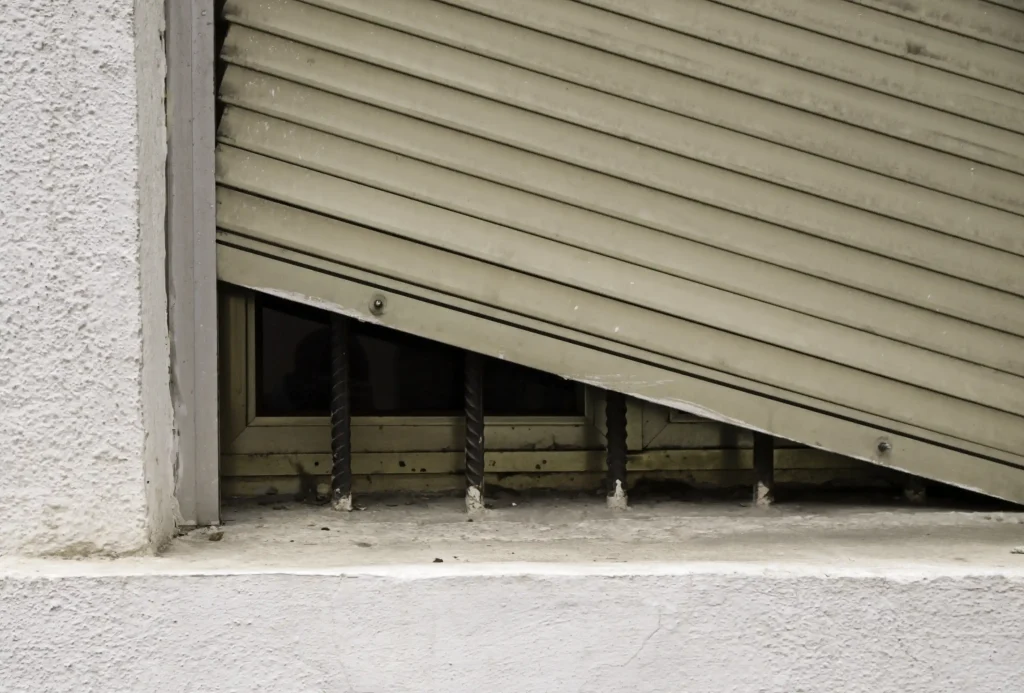
Check the Door for Crooked Travel
Crooked travel is one of the biggest red flags tied to fast drops. It usually means the door is not sharing the load evenly.
Look for:
- A bottom corner that “leads” on the way down
- A gap between the rollers and the track on one side
- A door that looks angled in the opening
If the door is crooked, the system can bind and then suddenly release, which creates the fast-drop feeling. Crooked travel often pairs with cable problems, especially when one cable has loosened or slipped.
For a deeper breakdown of cable failure and what it looks like, read What Happens When Garage Door Lift Cables Start to Fail.
Do a Quick Spring Check Without Touching
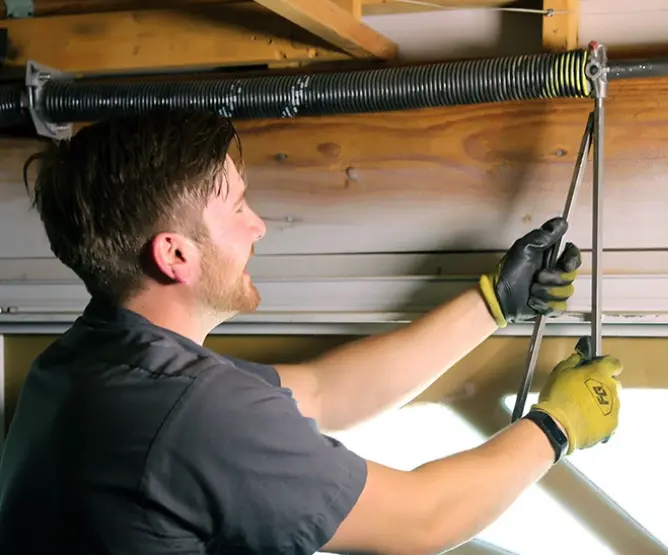
Springs are the heart of door control. When they weaken or break, the door becomes heavy, and gravity takes over.
What to look for on a torsion system
Torsion springs sit above the door on a shaft. You are looking for:
- A visible gap in the spring coil
- A spring that looks stretched or separated
- A door that suddenly became much heavier
What to look for in an extension system
Extension springs run along the sides near the tracks. You are looking for:
- A spring hanging lower than normal
- A broken spring segment
- A safety cable that looks slack or stressed
If a spring is broken or near failure, your door may drop fast because the counterbalance is gone. Do not attempt to adjust springs.
Scan the Lift Cables for Visible Trouble
Cables are easy to ignore because they are thin. But they carry a massive load.
From a safe distance, scan for:
- Fraying strands or “fuzz” along the cable
- Heavy rust or discoloration
- Slack cable on one side
- A cable that looks off the drum
If you see fraying or slack, the safest move is to stop using the system. A compromised cable can fail suddenly and pull the door out of alignment.
Look at the Cable Drums and Wrap Pattern
Cable drums sit near the top of the tracks on torsion systems. When a door drops fast or crooked, drum wrap issues are common.
What you can check safely:
- Does the cable look neatly seated in the grooves
- Does it look stacked or messy
- Does one side look tighter than the other
A miswrapped garage door cable can cause uneven tension. That often leads to a door that drops fast, then jerks, then binds.
Inspect the Rollers and Track Path for Binding
A door can drop fast even when the springs are not fully broken if the track path is forcing the door to bind and then release.
Look for:
- Bent track sections
- Loose track brackets
- Rollers that look worn, chipped, or angled
- Dirt buildup or debris where the rollers travel
Binding creates resistance. When resistance suddenly releases, the door can speed up unexpectedly. This is especially common when a door is slightly out of alignment, and the rollers are fighting the track.
Check for Loose Hardware That Lets the Door Shift
Fast dropping sometimes happens because the door is shifting more than it should. That shift changes how the load moves through the system.
From a visual standpoint, look for:
- Hinges that look loose or cracked
- Wobble at the track mounting points
- Movement at the top section where the opener arm connects
If the door is shifting at the hinges or track supports, the door can “fall into” a faster close because the system is no longer guiding it smoothly.
Use a Simple Balance Clue Without Forcing It
A safe balance clue can tell you whether the opener is masking a mechanical problem.
If you are comfortable doing a basic check:
- With the door fully closed, pull the emergency release cord
- Lift the door only slightly, just enough to feel resistance
- If it feels unusually heavy or wants to drop immediately, stop
A heavy door is one of the strongest indicators of spring or counterbalance failure. Do not keep testing. One quick check is enough.
Check the Photo Eyes and Closing Behavior
Sometimes the “drop fast” complaint includes sudden reversals, weird stops, or a door that closes and then pops back up.
Check:
- Are the photo eyes aligned and clean
- Is there sunlight glare hitting one sensor
- Are there spider webs or dust on the lenses
Photo eyes do not usually make a door slam, but they can create confusing behavior that makes homeowners cycle the door repeatedly. That repeated cycling is what often turns a small problem into a larger one.
What Your Inspection Results Usually Mean
Use this as a simple symptom-to-likely-cause map.
- The door feels heavy and drops fast
- Likely spring fatigue or spring break, sometimes paired with cable strain
- The door looks crooked in the opening
- Likely cable tension imbalance, drum wrap issues, or track binding
- The door shudders and then speeds up
- Often, binding rollers or track alignment trouble releases suddenly
- Opener strains, clicks, or sounds louder than normal
- The opener may be compensating for a mechanical problem
- The door reverses during closing with no clear obstacle
- Could be sensor issues, but also could be binding or resistance events
If your checks point to a cable problem, the cable system needs evaluation as a full set, not just “the bad side.” That is why cable issues are typically handled by a technician who can restore even tension across the system.
Tips to Reduce the Risk of a Fast Drop
Many fast drops are preventable with simple habits and routine service.
Keep the track area clean
In Cypress garages, wind and storms can push grit inside. Clearing debris helps rollers travel smoothly.
Listen for early noise changes
New scraping, popping, or rattling is often a warning sign before the door starts dropping fast.
Avoid repeated testing when something feels wrong
If the door moves oddly once, do not keep cycling it. That is how cables slip, and tracks bend.
Get a routine system inspection
A professional inspection helps catch:
- Early spring fatigue
- Cable corrosion
- Loose hardware
- Roller wear
- Track misalignment
Handled early, many issues stay manageable. Ignored, they often turn into a door that becomes unsafe to operate.
When to Stop Inspecting and Call a Professional
Stop your inspection and schedule service if you notice:
- A visible gap in a torsion spring
- Fraying or slack lift cables
- The door is crooked or jammed
- The door feels heavy during a brief manual check
- The door drops suddenly or unpredictably
If you are unsure whether your symptoms are “serious enough,” it is safer to assume they are. A falling door does not give second chances.
Schedule Service Before the Door Becomes Unstable
A fast-dropping garage door is usually a counterbalance or alignment issue, not a simple opener quirk. The safest approach is to observe, check for obvious visual signs, and stop before you make adjustments that require training and proper tools. When you catch the problem early, you protect your door, your opener, and anyone near the opening.
If you want a professional set of eyes on what you found, Garage Door Wizard can inspect the full system, explain the root cause in plain terms, and recommend the safest next step for your home in Cypress, TX. Contact us or give us a call today to schedule an inspection and get your door back to smooth, controlled operation.
Frequently Asked Questions