A garage door that slams shut is not a minor issue. It is a safety warning and often a sign that garage door repair is needed right away. In real service situations, the most serious injuries and expensive damage usually happen after a homeowner keeps cycling through a door that is already showing failure signs. In Cypress, TX, humidity, heat expansion, and storm moisture can speed up spring fatigue and cable corrosion, which means small warning signs can escalate quickly.
This guide focuses on the stop-now signals. You will see clear red flags, what they typically indicate, and what to do next before the issue turns into a larger garage door repair problem. Garage door systems store high tension, and improper adjustments can cause serious injury.
Quick Answer
Stop using a slamming garage door immediately if it drops fast, travels crooked, makes grinding or snapping sounds, feels heavy during a brief manual check, or shows visible cable or spring damage. These signs usually point to counterbalance failure, cable tension problems, or track misalignment that can lead to sudden door collapse.
If you want the full explanation of why a slamming garage door happens and what it usually means, read Garage Door Slams Shut: What It Means and Why It’s Urgent.
Stop Using the Door If You See These Red Flags
If any of these are happening, treat it as a stop-use event. Do not “test it one more time.”
- The door drops fast or crashes to the floor
- A controlled close should not turn into a free-fall.
- A fast drop often means the door is no longer supported by the spring and cable system.
- The door looks crooked in the opening
- Crooked travel is a major risk because the door can bind in the tracks and then suddenly release.
- This is one of the most common patterns seen right before cables slip or fail.
- If crooked travel is happening, the cable system needs immediate evaluation.
For a deeper explanation of early cable warning signs, read What Happens When Garage Door Lift Cables Start to Fail.
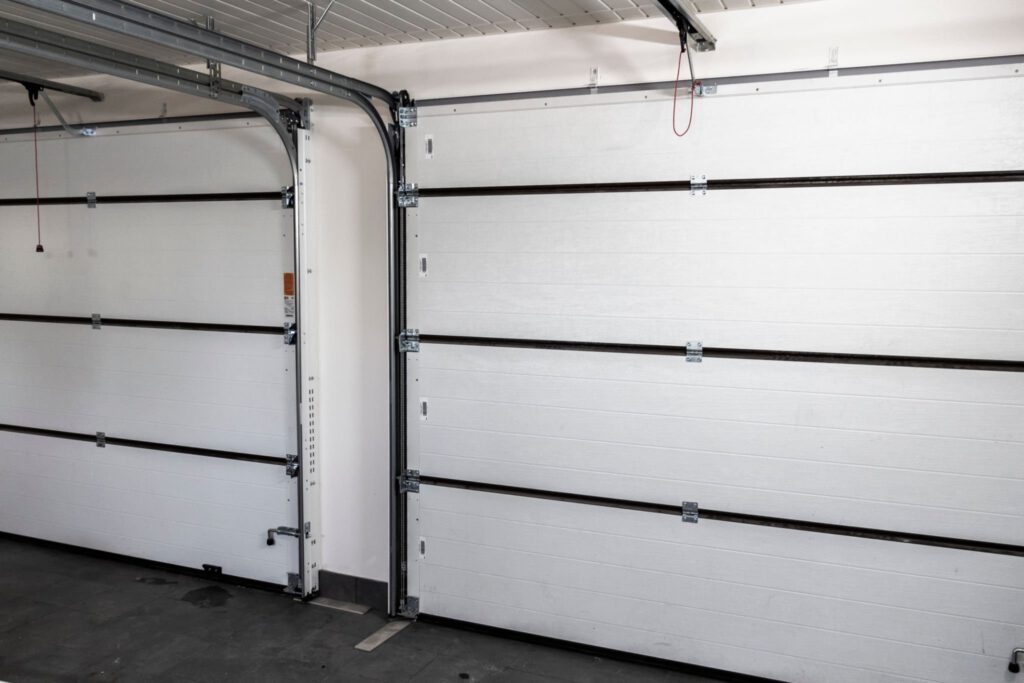
- You see frayed cable strands or a slack cable
- If the cable looks fuzzy, rusted, or loose on one side, the system is not stable.
- A compromised cable can snap without warning.
- You see a gap in a torsion spring
- A torsion spring with a visible separation is usually broken.
- That means the door weight is no longer counterbalanced, and the door can fall.
- The door shakes, shudders, or jerks during closing
- This often points to binding, misalignment, or uneven tension.
- Jerky travel increases the chance of a sudden drop.
- You hear grinding, scraping, popping, or a sharp bang
- New harsh sounds are not normal.
- They often signal hardware strain, roller binding, track contact, or cable slip.
- A sharp bang can indicate a spring break event.
- The opener strains or sounds like it is working too hard
- Openers are designed to move a balanced door.
- If it sounds like it is fighting the door, it is likely compensating for a mechanical failure.
- Continued use can damage the motor or internal drive parts.
Stop Using the Door If These Situations Apply
Sometimes the warning signs are subtle, but the situation itself makes continued use unsafe.
- The door has already slammed once
- If it has slammed once, it can slam again.
- A single slam is usually the first major warning.
- The door is used as the main entry multiple times a day
- High cycle use increases failure risk when harthe dware is already worn.
- In Cypress homes, heavy daily usage accelerates wear.
- The garage has high moisture or visible rust
- Humidity weakens cables, rollers, and bearings.
- Visible rust in the bottom bracket area is a serious warning sign.
- The door blocks your primary exit or stores valuable property
- An unstable door can jam open or shut.
- That creates both safety and security concerns.
Common Causes Behind Stop-Use Symptoms
You do not need to diagnose the exact part to make a safe decision. But understanding likely causes explains why urgency matters.
- Broken or failing spring
- Springs carry most of the door weight.
- When they fail, the door becomes heavy and drops faster than normal.
- Cable damage or drum slip
- A frayed, stretched, or miswrapped garage door cable creates uneven support.
- Uneven support makes doors tilt, bind, and drop hard.
- Track and roller binding
- Bent tracks or worn rollers create resistance.
- When resistance suddenly releases, the door can accelerate downward.
- Door section weakness
- Cracked hinges or weakened garage door panels allow flexing.
- Flexing shifts the load and causes unstable closing.
If you are unsure what specific mechanical clues to check safely, read What to Inspect When a Garage Door Drops Fast before operating the system again.

Why Repeated Testing Makes It Worse
From an industry standpoint, repeated cycling is what often turns a manageable repair into structural damage.
- A slipping cable can miswrap further with each cycle
- A crooked door can bend tracks more each time
- Rollers can pop out of alignment
- The opener can pull the top section inward
- A weak spring can fail completely under load
If something feels wrong, more cycles will not solve it. They usually make it worse.
What to Do Instead
If you suspect your garage door is unsafe:
- Leave it closed if possible
- Keep people and pets away from the door path
- Avoid standing underneath the door
- Do a visual-only inspection
- Schedule professional service
If the door is stuck open, keep the area clear and avoid forcing it down.
Prevention Tips That Reduce Slam Risk
While not every failure is preventable, routine care lowers risk significantly.
- Schedule annual professional inspection
- Replace worn springs before full breakage
- Address crooked travel immediately
- Keep tracks clean and free of debris
- Pay attention to new sounds or heavier operations
In Cypress, humidity and heat cycles make preventive service even more important.
When to Stop Cycling a Slamming Garage Door
A slamming garage door is not something to ignore. Fast drops, crooked movement, frayed cables, and grinding sounds are all signs that the counterbalance system may be failing. Continuing to operate the door increases the chance of injury, opener damage, or structural track problems.
If your door is showing any of these stop-use signs, Garage Door Wizard can inspect the full system, identify the exact cause, and restore safe, controlled operation. Contact us or give us a call today to schedule a professional garage door inspection in Cypress, TX, and prevent a minor issue from becoming a serious hazard.