
A garage door can seem fine one day, then suddenly feel heavy, uneven, or loud the next. That change is often the moment homeowners realize springs are not just “extra parts.” Springs are the reason your door can lift smoothly without the opener fighting the full weight. When springs break, the door can become unsafe quickly, and the damage can spread to cables, drums, rollers, and even the opener if the door keeps cycling.
In Cypress, TX, heat swings and daily use can wear springs down faster than many homeowners expect. Common signs of broken garage door springs include a loud bang, a door that feels suddenly heavy, an opener that strains or reverses, uneven lifting or a tilted door, jerky movement, and a visible gap in a torsion spring. When these signs appear, stop using the door, keep the area clear, and avoid springs, cables, and bottom brackets until an expert inspects the system.
The Most Obvious Signs Of Broken Garage Door Springs
Some spring failures are dramatic, and others are sneaky. Either way, the clearest signs usually show up in how the door moves, how it sounds, and how heavy it feels.
- A loud bang from the garage: A sudden pop can mean a spring snapped, especially if the door will not open normally after.
- The door feels unusually heavy: If the door feels much heavier than usual by hand, the spring may be broken or too weak.
- The door opens a few inches and stops: The opener may start lifting, then stop or reverse because the door is too heavy.
- Crooked or uneven movement: If one side rises faster, the door can tilt and bind in the tracks.
- A visible gap in a torsion spring: A clear gap in the coil above the door is a strong sign that the spring broke.
- The door slams or drops fast: Springs help control the door’s weight, so a fast drop is a serious warning sign.
- New grinding, rattling, or squealing sounds: Extra strain can make the system noisy, especially if the door also feels heavy or shaky.
If you are also trying to confirm whether your symptoms point to spring failure, read How Do You Know You Need Garage Door Spring Repair?.
Signs That Feel “Small” But Often Point To Spring Failure
Not every spring problem starts with a bang. Springs can weaken over time, and the early signs can feel like normal aging until the door stops working.
- The door will not stay in place when lifted partway: With the opener disconnected, a balanced door should hold near mid-height. If it drifts down or shoots up, spring tension is likely off.
- The opener sounds like it is working too hard: If the opener suddenly sounds louder or struggles to start, it may be pulling more weight than it should.
- The door shudders or jerks during travel: Shaking or stop-and-go movement often means the door is unbalanced and the springs may be weakening.
- You notice a loose or hanging cable: A slack, frayed, or off-track cable can happen after spring tension changes. Do not touch it.
- The door gets stuck halfway: If the door stops mid-travel and also feels heavy or uneven, spring trouble is a strong possibility.
What Broken Garage Door Springs Usually Look Like
Homeowners often ask, “What should I actually be looking for?” The answer depends on the spring style.
Torsion Spring Systems
Common visual clues include:
- A clear gap in the spring coil
- The spring looks separated into two sections
- The door struggles to lift and may not open fully
- The door feels heavy when lifted manually
Torsion springs are mounted above the door, usually on a metal shaft. When they break, the door often becomes noticeably harder to lift.
Extension Spring Systems
Common visual clues include:
- A spring that looks stretched out of shape
- A spring that hangs oddly on one side
- The door rises unevenly or leans
- The door may bounce more than normal
Extension springs run along the sides. If one fails, the door may lift unevenly, and that uneven lift can increase the chance of track binding.
What To Do Right Away If You Suspect A Broken Spring
When you see signs of broken garage door springs, the goal is to prevent the door from moving in an unsafe way and prevent damage from spreading.
Here is the safest short plan:
- Stop cycling the door if you hear a bang, see a spring gap, or notice heavy or uneven movement.
- Do not try to “help” the opener by lifting while it runs. That can cause sudden movement and strain.
- Keep the area clear so kids and pets are not near the door path.
- Do not pull on cables or touch the spring system.
- If the door is open, do not stand under it. An unbalanced door can drop if the system shifts.
If you need to understand whether the door can be moved at all with a broken spring, read Can You Open a Garage Door With a Broken Spring?.
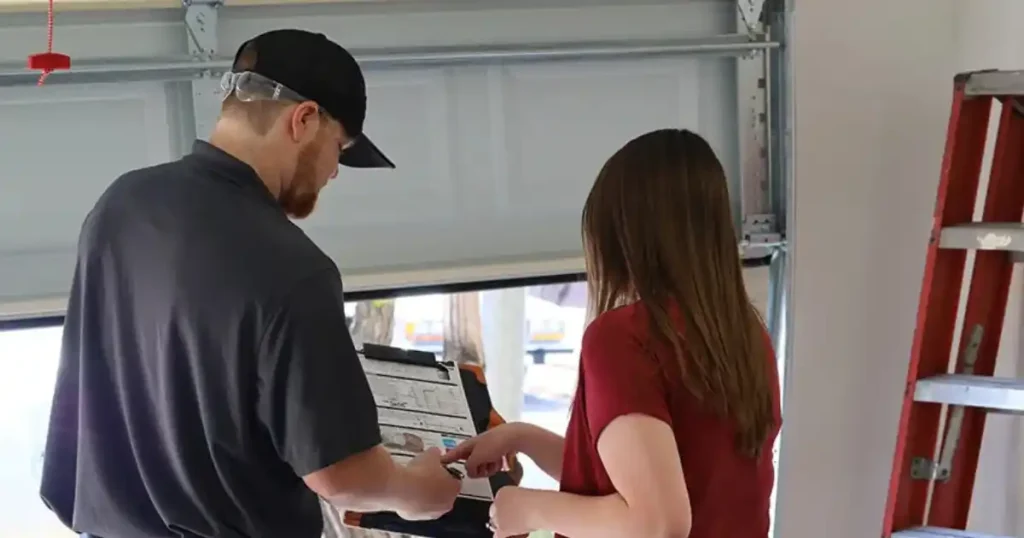
Why Springs Break And Why Cypress, TX Conditions Matter
Springs fail mainly because of cycle wear. Every time the door opens and closes, the springs flex and carry the load. Over time, metal fatigue builds until the spring can no longer hold proper tension, or it snaps.
In Cypress, TX, a few local factors can make spring wear show up faster:
- Heat and temperature shifts that stress metal over time
- Higher humidity can increase corrosion risk on older hardware
- Frequent daily cycles from family schedules, school runs, and errands
- Heavier doors (insulated doors and doors with windows) that demand more from springs
Even if your door is not “old,” heavy daily use can push springs closer to their cycle limit sooner than you expect.
If an attached garage affects comfort in the home, the U.S. Department of Energy explains how weatherstripping and sealing doors can reduce unwanted air movement.
How To Tell If It Is A Broken Spring Or Something Else
Some symptoms overlap with other problems, so it helps to connect the clues.
If The Door Is Heavy And The Opener Struggles
That strongly points toward a spring problem, especially if the door used to move smoothly and now feels like dead weight.
If The Door Is Crooked Or One Side Lags
That can be spring-related, but it can also involve cables, drums, or track binding caused by imbalance. A spring break can start the chain reaction.
If The Door Is Loud But Still Smooth
Noise alone may be rollers, hinges, or loose mounting. But if noise appears along with heavy lifting, uneven travel, or reversing, springs should be inspected first.
If The Door Will Not Move At All
That can be a spring break, but it can also be a locked door, a failed opener, or a sensor issue. The difference is usually in the “feel.” A broken spring usually makes the door feel unusually heavy by hand.
How To Describe The Problem Clearly When You Schedule Service
When you call for help, clear details help speed up the diagnosis. You do not need technical language. You just need what you observed.
Helpful details to share:
- Did you hear a sudden bang?
- Does the door feel heavy by hand?
- Does the opener start, then stop, or reverse?
- Does the door rise evenly or tilt?
- Do you see a gap in the torsion spring?
- Do you see any loose or frayed cables?
- Is the door stuck open, stuck closed, or stuck halfway?
If your door is stuck open and you cannot secure it, that may qualify as an urgent situation. If you want to understand typical timing for spring service visits, read How Long Does Garage Door Spring Replacement Take?.
Why Repeated Tests Can Make Spring Damage Worse
Testing seems harmless, but with broken garage door springs, extra cycles can cause:
- Garage door opener strain and early failure
- Cable slipping or fraying
- Door tilting and track binding
- Hinge and panel stress
- Sudden drops during manual handling
A better approach is to test visually once, confirm the warning signs, then stop cycling the system and schedule service.
Bob Vila’s maintenance guide also highlights that uneven movement and a failed balance check are early warnings that should trigger an inspection instead of repeated cycles.
What You Can Check Safely Without Tools
You can do a few safe checks from a distance, with the door closed whenever possible.
Safe checks include:
- Look for a spring gap on torsion systems
- Watch whether the door rises evenly
- Listen for harsh changes in sound during travel
- Notice if the opener strains or reverses quickly
- Look for a cable that appears slack or frayed (do not touch)
If you see multiple warning signs at once, treat it as a spring issue until proven otherwise.
Get The Door Back To Safe, Reliable Movement
Broken springs do not usually get better on their own, and the longer the door runs unbalanced, the more strain the system takes. If you notice a loud bang, a heavy door, crooked travel, or a visible spring gap, the safest next step is to stop using the door and schedule a proper spring inspection so the door can be balanced and tested again.
Garage Door Wizard provides spring service in Cypress, TX, with a focus on safe handling, clear communication, and smooth door movement you can trust after the work is complete. Contact us or give us a call.