
When a broken spring garage door issue happens, urgency sets in quickly, especially when a vehicle is stuck inside. In some cases, the door may still move, but it can also become unstable, extremely heavy, and unpredictable. A broken spring changes how the system carries weight, which can strain the opener, pull the door out of alignment, or cause sudden movement.
In Cypress, TX, warm weather, humidity, and frequent daily cycles can push spring systems toward failure sooner than many homeowners expect. With a broken garage spring, the safest approach is to avoid repeated opener attempts, avoid pulling the emergency release on an open door, and never try lifting on one side. If the door feels heavy, tilts, jerks, or the opener strains or reverses, stop and keep the area clear until an expert inspects the spring, cables, and balance system.
What A Broken Spring Really Means For Your Garage Door
Garage door springs are the main parts that counterbalance the door’s weight. The opener is built to guide a balanced door, not lift a heavy door by itself. When a spring breaks, the counterbalance is lost, so the door can feel much heavier and may not move the way it used to.
Here are common things you may notice right away:
- The door feels unusually heavy if you try to lift it
- The opener strains, stops, or reverses
- The door rises a few inches, then drops
- The door tilts or moves unevenly
- The door closes faster than normal
If you are not sure whether the spring is actually broken, check the warning signs first. This guide covers the most common symptoms: What Are The Signs Of Broken Garage Door Springs?.
Can You Open A Garage Door With A Broken Spring
It may be physically possible in some situations, but “possible” does not mean “safe.” Whether the door can be opened depends on several factors:
- Door size and weight
- Whether the system uses one spring or two springs
- Whether one spring broke or both springs are worn
- Spring type (torsion or extension)
- Cable condition and track condition
- How far does the door need to move
- Whether the opener is still attached and trying to lift
Some doors will not move at all after a spring breaks. Other doors may lift a few inches and stop. A few may lift with help, but they can still be dangerous because the door is no longer supported correctly.
If you are still confirming whether your symptoms point to spring trouble, read How Do You Know You Need Garage Door Spring Repair?.
Why Forcing The Door Is Risky
Trying to force a garage door open when a spring is broken is one of the most common ways extra damage happens. It can also create a real safety hazard.
Here are the main risks:
- Sudden door drop: Without a counterbalance, the door can fall quickly once it is off the floor.
- Door tilt and track binding: Lifting unevenly can cause the door to lean and jam in the tracks.
- Cable slipping: A broken spring can change cable tension, leading to cables slipping off the drum.
- Opener overload: The opener may strain, overheat, or fail because it is pulling more weight than it should.
- Panel and hinge strain: Heavy, uneven movement can stress hinges and door sections.
Even one rough attempt can turn a straightforward broken spring replacement into a longer repair that includes cables, drums, or track alignment work.
Should You Try Using The Opener If The Spring Is Broken
Many homeowners press the remote or wall button to “test it.” Most of the time, the opener will react in one of these ways:
- The opener starts, then stops and reverses
- The opener hums but does not lift
- The opener lifts slightly, then shuts down
- The opener strains loudly and fails to move the door
Modern openers are designed to stop when they sense too much resistance. That protection helps, but repeated button presses can still strain the motor and drive parts.
If the door is heavy due to a broken spring, the opener is not the solution. It is a signal to stop cycling the system and schedule service.
Forbes Home notes that tension spring work is typically best handled by a qualified professional due to the high force the system stores.
What Happens If You Try To Lift The Door By Hand
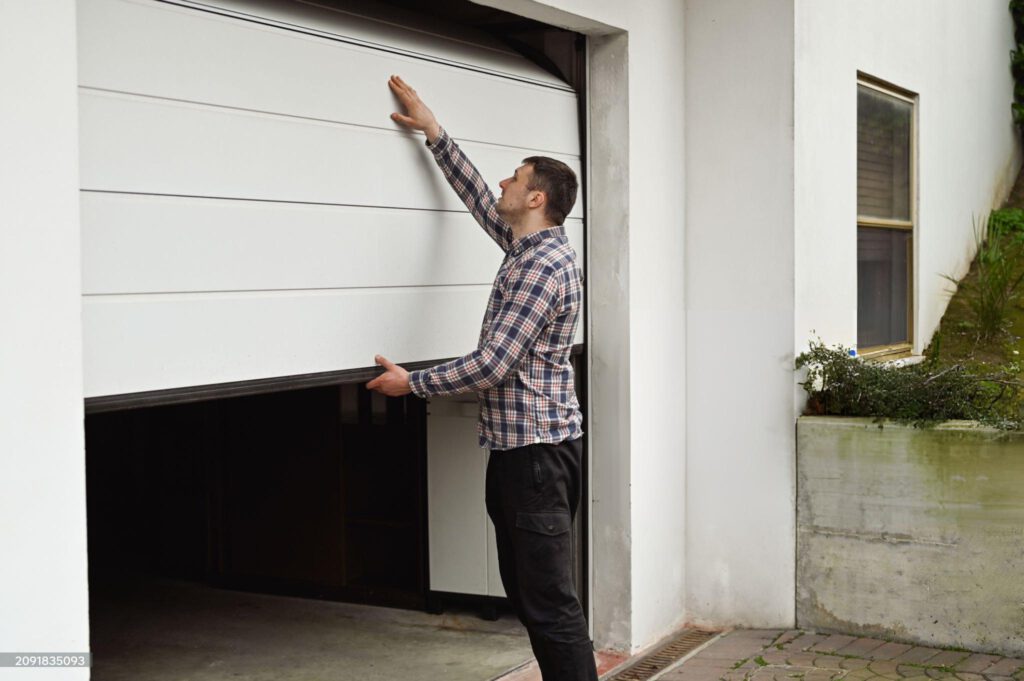
Manual lifting is often discussed online, especially when a vehicle is stuck inside. It is important to understand what makes this risky.
When springs are working, the door feels much lighter than it truly is. When the spring is broken, the full weight shows up. That means:
- The door may be too heavy to lift smoothly
- The door may move up, then drop quickly
- The door may tilt if the lifting is not even
- The door may bind in the tracks and get stuck
If the door must be lifted for access, the safest approach is controlled handling, which often includes securing the door so it cannot fall. Without that control, the door can shift suddenly.
Angi explains that when a spring fails, the door can become dangerously heavy and unpredictable
When Opening The Door Becomes An Emergency
Some spring failures are inconvenient but stable. Others are urgent because the door is not secure or cannot be closed.
Emergency conditions often include:
- The door is stuck open and cannot close safely
- The door is hanging crooked
- A cable looks loose, frayed, or off the drum
- The door is stuck halfway and looks tilted
- The door cannot be secured, and the garage is exposed
In these situations, emergency garage door spring repair is often less about “opening the door” and more about stabilizing it, securing it, and restoring safe operation.
If your door is open, avoid standing under it and keep the area clear. An unbalanced door can drop if cables slip or hardware shifts.
What To Do Instead Of Forcing The Door
If you suspect a broken spring, the safest plan is simple and practical. It focuses on reducing risk and preventing damage from spreading.
Recommended steps:
- Stop using the garage door opener
- Keep kids and pets away from the door path
- Do not touch the springs or cables
- Do not try repeated “test cycles.”
- If the door is closed, leave it closed when possible
- Schedule an inspection for broken garage door springs
If you have a second entry into the home, use it. If your vehicle is stuck, it is still safer to pause and handle the door correctly than to force it and create a bigger problem.
How Experts Safely Handle A Door With A Broken Spring
A professional approach is designed to prevent sudden drops, protect hardware, and restore balance the right way.
Common steps during service include:
- Confirming spring type and failure condition
- Checking whether the door is tilted or binding
- Inspecting cable condition and drum alignment
- Securing the door so it cannot drop unexpectedly
- Replacing the correct springs for the door’s weight and height
- Restoring proper tension and balance
- Testing full travel and smooth operation
How Long Will The Door Be Out Of Service
Most homeowners in Cypress, TX, want to know how long the garage will be affected. In many cases, garage door spring replacement can be completed in a single visit, but timing depends on the door system and whether other parts were strained.
Factors that can affect timing include:
- One spring vs two springs
- Door weight and insulation
- Cable and drum condition
- Track alignment and roller condition
- Whether the door is stuck open and needs stabilization first
For a clearer picture of what affects service time, read How Long Does Garage Door Spring Replacement Take?.
Why Broken Springs Should Be Addressed Quickly
Even if the door is closed and not in the way, a broken spring should not be ignored. Over time, spring failure can lead to:
- Cable tension changes that cause slipping or fraying
- Track binding if the door becomes tilted
- Opener strain if the door is tested repeatedly
- Hardware stress that shortens the life of rollers and hinges
Also, if the door is only partially supported, it may become harder to secure later. Addressing the issue sooner helps keep the repair focused and helps restore reliable, smooth operation.
Safe Access Without Taking Risks
A broken spring can disrupt an entire day, especially when a vehicle is stuck inside. The safest approach is to treat the door like a heavy moving system that is no longer balanced. Forcing it may work once, but it also may cause the door to drop, tilt, or strain the opener, and those problems can escalate quickly.
Garage Door Wizard helps Cypress, TX homeowners handle broken spring situations with safe door stabilization, correct spring selection, and full testing to restore balanced movement you can trust. Contact us or give us a call.