
Garage door replacement can be one of the most impactful home upgrades for safety, reliability, and curb appeal. A new door can improve day-to-day operations, enhance security, and refresh your home’s exterior. Still, many homeowners wonder what the process entails and how to prepare, especially when the current door is worn or no longer operates smoothly.
Understanding the steps ahead can reduce tension and help you feel confident about the decision. From initial evaluation and measurements through removal, installation, and final safety inspection, each phase serves a clear purpose. Knowing what happens during the job also helps you plan around access, keep the work area clear, and know what to check once the new door is installed.
Understanding Garage Door Replacement
Garage door replacement involves more than installing a new door panel. In most cases, the job also includes replacing key parts such as tracks, springs, and hardware, and sometimes updating the opener for proper compatibility. A professional garage door team confirms that every part works together so the system runs smoothly, stays secure, and delivers long-term reliability.
Garage door repair can address minor issues, such as a worn roller or minor alignment concerns. Replacement becomes the smarter long-term selection when damage is widespread, performance is unreliable, or the system is outdated and no longer meets your needs. Once you recognize the signs that replacement is the right move, understanding how installation works helps you prepare and ensures the new door is set up for safe, consistent operation.
If you want guidance on when a full replacement makes the most sense, read When Is Garage Door Replacement the Right Choice?
Garage Door Replacement vs. Garage Door Repair: Key Differences
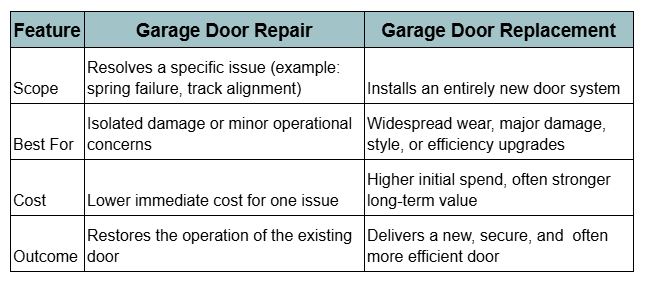
Choosing between garage door repair and replacement depends on the condition of the system and how often problems return. Repair is usually the right choice when there’s a single, isolated issue, such as a spring failure, a damaged roller, or minor track alignment, and the rest of the door is still in stable condition. In these situations, replacing a single part can restore smooth operation without affecting the entire system.
Garage door replacement is a major upgrade for doors with significant wear, recurring malfunctions, or outdated safety features. If service calls keep stacking up, replacement can deliver stronger long-term value by reducing repeat repairs. It’s also a smart selection when you want a fresh exterior design or improved energy efficiency through newer insulation and better seals. The best choice comes from evaluating the door’s overall condition and your long-term plans for the home.
If you want to confirm the most common warning signals that point to replacement, read What Are the Signs a Garage Door Needs Replacing?
Why Homeowners in Cypress, Texas Choose to Replace Their Garage Doors
For many homeowners in Cypress, Texas, replacing the garage door is a smart way to refresh the exterior and increase property value. Because the garage door occupies a large portion of the home’s front view, a worn or unreliable door can make the exterior appear dated. Replacing it can immediately boost curb appeal and make the home appear more up-to-date and well-maintained.
Replacement also gives you the chance to select a style that matches your home’s design, whether that’s traditional, modern, or carriage-house inspired. Beyond appearance, a newer garage door system can enhance daily reliability, security, and energy efficiency through updated insulation and improved sealing. With both visual impact and functional upgrades, a new garage door is often viewed as a home improvement that delivers lasting value.
Preparing for Your Garage Door Replacement
Once you’ve decided on garage door replacement, a little preparation can help the day run smoothly. Begin by clearing the area around the garage opening and along the door’s travel path. Move vehicles out of the garage and relocate tools, stored items, and anything positioned near the tracks. This creates a safer workspace and gives the technician enough room to remove the old door and complete the installation without delays.
A clean, open workspace also supports efficient, quality results. With fewer obstacles, the installation team can focus on accurate alignment, proper spring tension, and a detailed safety inspection of essential parts. This preparation helps the system operate correctly from day one and supports reliable performance over time.
If you want a clearer idea of typical timelines and what can extend the schedule, read How Long Does a Garage Door Replacement Take?
What to Consider Before Beginning a Garage Door Installation
Before installation day, it helps to review a few key factors to select a garage door that fits your home and supports long-term performance. Planning a garage door replacement makes the process smoother and helps ensure the system aligns with your priorities for durability, style, and efficiency.
Start with the door material and how it holds up in the Cypress, Texas, conditions. Steel and aluminum are popular for durability and low upkeep, while wood offers a classic style but typically requires more routine care. Insulation is another key factor, especially when the garage connects to the home. An insulated garage door can help maintain steadier temperatures and improve energy efficiency. It’s also worth selecting a design that complements the exterior and confirming whether an opener upgrade is needed to ensure compatibility, safety features, and daily convenience.
Key points to review include:
- Material: Steel, wood, aluminum, or fiberglass based on climate and upkeep needs
- Insulation: Added insulation for improved comfort and energy efficiency
- Style: A design that matches your home’s exterior
- Opener: Whether a new opener supports compatibility, safety, and convenience
Solid planning helps ensure the door and essential parts work together, supporting smooth operation and dependable performance.
Assessing the Latest Garage Door Styles and Material Options
Selecting a new garage door can be exciting, as today’s designs offer far more variety than older systems. You can select a modern garage door style with clean lines and wide panels, or choose a more traditional design that fits classic architecture. Carriage house garage doors are another popular option. They add the charm of barn-inspired styling while operating like a standard overhead door, making them a practical way to upgrade exterior character without sacrificing everyday convenience.
Beyond style, the material selection for garage doors plays a significant role in durability and maintenance. Steel garage doors are widely chosen because they’re durable and typically require minimal ongoing maintenance. Wood garage doors deliver a timeless, upscale finish but usually need more routine maintenance over time. Aluminum doors with glass panels create a sleek, modern style and can bring natural light into the garage. Fiberglass garage doors are also worth considering because they can resemble wood while resisting rust and many dents. To make the proper selection, consider local weather, expected maintenance, and long-term performance so the door’s design and parts support reliable daily operation.
Step-by-Step Process of Replacing a Garage Door
On installation day, the garage door replacement team arrives with the new door, the right tools, and all required parts for a complete setup. Experienced technicians follow a clear process to support safe handling and accurate installation. They confirm measurements, review the work area, and prepare the opening so the new garage door system fits correctly and operates as intended.
Next, the technicians carefully remove the old garage door, including worn hardware that can affect performance. They install the new tracks, panels, springs, and remaining hardware, then set the spring tension to ensure the door lifts and closes smoothly. After installation, they check alignment, test balance, verify opener compatibility, and complete a full safety inspection. With professional garage door installation, your new system is set up for secure operation and long-term reliability.
Removing the Old Garage Door and Evaluating the Opening
The first step in garage door replacement is removing the existing garage door system. The technician begins by disconnecting the opener and securing the door to prevent unexpected movement. Next, the technician carefully releases spring tension, a hazardous step in the process. Because springs store significant force, this step should be performed only by a trained professional using the proper tools and safety procedures.
Once spring tension is safely managed, the technician removes the old door panels, tracks, and remaining hardware. The work area is cleared, and debris is removed, leaving the garage opening clean and ready for installation. After removal, the technician evaluates the frame and opening for damage, rot, shifting, or weakened areas that could affect alignment. The opening is checked for level and squareness, as even minor issues can affect smooth operation and sealing. If adjustments or repairs are needed, they are completed before the new door is installed to support secure, consistent performance.
Installing the New Garage Door System and Hardware
Once the opening is ready, the technician begins the professional installation of your new garage door system. New tracks are mounted to the frame and carefully checked for secure fastening and correct positioning. Next, the door panels are assembled and guided into the tracks one section at a time to keep spacing consistent and ensure smooth movement.
After the panels are in place, the technician installs the springs, cables, rollers, and remaining hardware. This stage requires precision because spring tension must be set correctly for safe lifting and controlled closing. Proper tension also helps reduce wear on parts and supports reliable daily operation. The garage door opener is then set up and connected, whether it’s an existing unit or a new opener installed for compatibility. Finally, any decorative hardware you selected is added, and the system is prepared for testing.
DIY installation can be risky because garage door panels are heavy and springs store significant tension. A trained professional installs and adjusts each part correctly, helping ensure safe operation, consistent performance, and long-term reliability.
Enhancements and Upgrades During Garage Door Services
Garage door replacement is an ideal time to consider upgrades that improve comfort, security, and everyday convenience. Modern garage door services often include more than basic installation, giving homeowners options that support energy efficiency, quieter operation, and better control over access. These upgrades can also help the door system perform more reliably by reducing strain on key parts over time.
If you want a garage door that operates with less noise or improves insulation to reduce outside heat and cold, the right upgrade can make a noticeable difference. You may also be able to add smart features that let you monitor and operate the door from your phone, along with safety improvements that help protect the door system during daily use. Below are several popular options to select when scheduling a garage door replacement.
Energy-Efficient and Insulated Garage Door Replacement Options
If you want to reduce energy use, an insulated garage door is one of the smartest garage door replacement upgrades. Insulated panels help keep garage temperatures more stable, which can matter a lot when the garage is attached to the home or there’s a living space above it. With better insulation and sealing, the system can also reduce drafts and improve overall comfort near the garage entry.
Insulation helps limit heat transfer in both directions. That can help the garage stay cooler during hot months and warmer during colder weather, while also reducing the workload on nearby heating and cooling. Many homeowners select insulated steel garage doors for strength and dependable performance, while insulated fiberglass doors can offer a lighter option with strong resistance to rust. The right selection depends on your goals for durability, maintenance, and daily use.
Key benefits of an insulated garage door include:
- Lower energy use: Reduced heat transfer can support steadier indoor comfort and improved efficiency.
- Increased durability: Insulated doors often have reinforced construction that protects panels from dents and wear.
- Quieter operation: Insulation can dampen vibration, helping the door operate with less noise.
Integrating Smart Technology and Modern Features
Upgrading to a smart garage door opener can improve daily convenience and add an extra layer of security. Many modern openers include Wi-Fi connectivity, letting you open or close the garage door from a phone app even when you’re away. You can also receive alerts if the door is left open or if it operates unexpectedly, which helps you stay aware of access activity.
Smart openers often include rolling code technology, which changes the access code each time the remote is used to help reduce unauthorized entry. Many models also offer a battery backup so the opener can operate during a power outage. For a quieter home environment, belt-drive systems are a popular selection because they reduce vibration and noise during operation. These modern features can be added during garage door replacement or as part of a garage door opener upgrade for better compatibility and smoother performance.
What to Expect After Garage Door Services
After professional installation is complete, the final stage is ensuring you know how to operate and maintain the new system. A technician should walk you through basic use, safety features, and what normal operation should sound and feel like. You may also receive guidance on simple garage door maintenance steps, such as keeping the area around the tracks clear and scheduling periodic inspections and adjustments when needed.
Knowing what to do after the technicians leave helps you feel confident about your investment. Regular maintenance and early attention to wear can help protect essential parts, support smooth operation, and reduce unexpected breakdowns. With consistent care, your new garage door can stay reliable, secure, and ready for daily use for years.
Post-Installation Safety Checks and Maintenance Guidance
Before the technicians leave, they complete essential safety checks to confirm that the new garage door system operates correctly. They test the auto-reverse feature so the door returns upward if it contacts an object, and they verify photo-eye sensors respond properly. The technician also checks spring tension, door balance, track alignment, and fasteners to confirm the system moves smoothly and stays secure during daily use.
You’ll also receive simple maintenance guidance you can handle at home. The technician will explain where to apply garage door lubrication on rollers and hinges, how to do a quick inspection for loose hardware, and how to test key safety features. These steps help protect parts, support consistent operation, and reduce unexpected issues over time.
To keep your garage door operating safely, remember these tips:
- Monthly inspection: Check cables, rollers, hinges, and springs for wear, fraying, or unusual noise.
- Balance check: Disconnect the opener and lift the door by hand; it should stay about halfway open without drifting.
- Annual professional check: Schedule a technician inspection yearly to adjust tension, inspect parts, and catch issues early.
For ongoing upkeep, these maintenance tips outline simple monthly checks and why periodic professional inspection supports smoother operation over time.
How Replacing a Garage Door Can Increase Your Home’s Value
Garage door replacement is one of the strongest home upgrades for boosting property value. Industry research often highlights garage doors as a renovation with a strong return, largely because it can improve curb appeal immediately. Since the garage door is one of the most visible features on the front of the home, an older, worn door can make the exterior feel dated.
A new garage door that matches your home’s style creates a stronger first impression for buyers and visitors. Beyond appearance, an updated system signals that the home has been maintained with care and that key safety features are up to modern standards. That can help your property stand out in competitive neighborhoods.
Replacing a garage door can also support value through practical benefits, including better security, smoother daily operation, and improved energy efficiency with upgraded insulation and sealing. When curb appeal and performance improve together, garage door replacement becomes a smart way to strengthen both comfort and long-term resale appeal.
To explain why this upgrade is often viewed as high-impact, this ROI research shows that garage door replacement ranks highly among common exterior improvements.
Understanding what happens during a garage door replacement helps homeowners plan with confidence and get better results from the project. From removal and opening evaluation to installation, spring tension setup, and safety inspection, each step supports reliable operation, stronger security, and a cleaner exterior. When the door system is updated correctly, it can also support energy efficiency, improve daily performance, and add long-term value to the home.
At Garage Door Wizard, we handle garage door replacement with careful planning, precise installation, and clear communication from start to finish. Whether you want an insulated door, quieter operation, or smart access features, our technicians can help you select the right options for your home. Contact us or give us a call to schedule service and get answers to your questions.
Frequently Asked Questions
How does garage door replacement affect home energy efficiency?
An insulated garage door can reduce heat transfer between the garage and outdoors. That can help stabilize temperatures near the garage entry, especially for attached garages. Better insulation and sealing may also reduce drafts and support improved overall energy efficiency.
What influences the total cost of a garage door replacement?
Several factors affect the total: door size, material, insulation level, window inserts, hardware type, opener compatibility, and required parts like tracks and springs. Site conditions and any opening adjustments can also impact the final scope of work.
What should I consider before replacing my garage door?
Focus on material, insulation, style, and long-term maintenance expectations. Also, confirm wind resistance needs, opener compatibility, and whether you want quieter operation. A technician can help match the door design and parts to your daily usage and goals.
How long does it take to replace a garage door?
Most standard garage door replacement projects are completed the same day. Time can vary based on door size, insulation, hardware requirements, and whether the opening needs adjustments. After installation, expect time for testing, balance checks, and a final safety inspection.
What are the best garage door styles available for homes?
Popular options include raised-panel doors, contemporary flush-panel doors, and carriage house designs. Your best selection depends on your home’s exterior style, desired windows, and maintenance preferences. A technician can recommend designs that also support proper sealing and durability.
What is the difference between garage door repair and garage door replacement?
Garage door repair addresses isolated issues like worn rollers, minor track alignment, or a single damaged panel. Garage door replacement is a full system update, often recommended when damage is extensive, problems recur, or the door is outdated and no longer dependable.
Can I replace a garage door myself, or should I hire a professional?
Hiring a professional is strongly recommended. Garage door systems are heavy, and spring tension is hazardous. A trained technician installs and adjusts parts correctly, checks safety features, and confirms the door is balanced for smooth, secure operation.
What safety checks should be completed after installation?
Key checks include testing the auto-reverse function, confirming the photo-eye sensors work, verifying spring tension and balance, and inspecting hardware and track alignment. The opener should be tested for smooth travel limits and consistent response from remotes or wall controls.
What are common signs that a garage door needs to be replaced?
Common signs include repeated breakdowns, visible panel damage, excessive rust, poor sealing, loud operation, or uneven movement. If the door struggles to open smoothly or needs frequent service, replacement is often the safer long-term option.